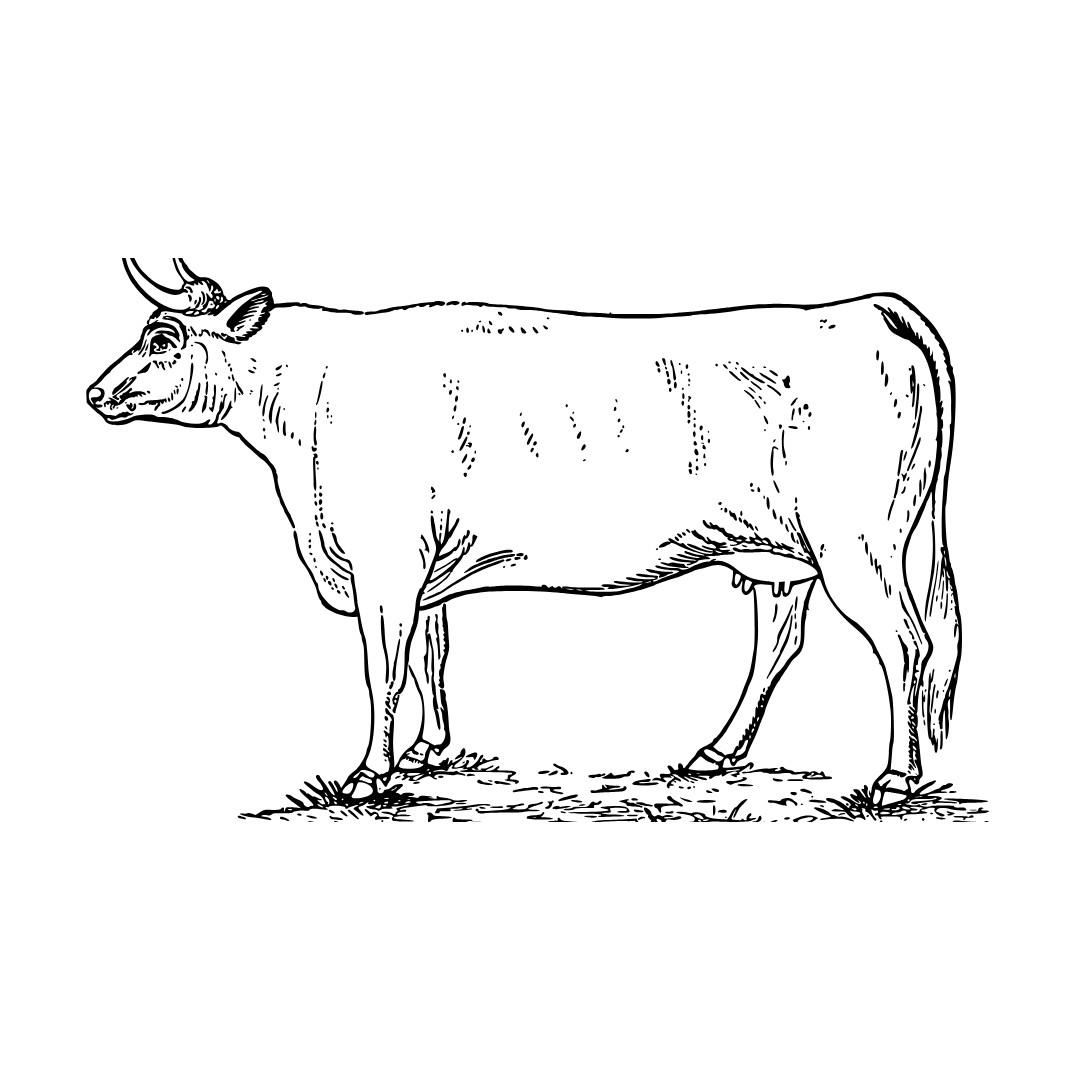
Looking beyond simple narratives
It's not the cow, it's the how
Spend five minutes standing in a field of well-managed, grazing cattle and you'll notice something remarkable.
The grass isn't silent. It's buzzing.
Bees move from flower to flower. Earthworms are busy beneath your feet. Birds search for insects disturbed by grazing animals. Dung beetles recycle manure back into the soil. The pasture is alive. What you're looking at isn't just a field of cows, it's an ecosystem in motion.
The trouble is, not many people ever get to see it.
Instead, our perception of cattle is often shaped by headlines that reduce a complex issue to a simple conclusion: cows are bad for the planet.
But nature is rarely that simple.
Cows are part of nature, not separate from it
Cows are as much a part of the natural world as the grass they graze, the fish in the ocean, and the birds in the sky. And so are we.
For thousands of years, large grazing animals have shaped landscapes across the world. Their grazing stimulates plant growth, their manure feeds soil organisms, and their movement helps cycle nutrients through ecosystems. Healthy grasslands didn't evolve despite grazing animals, they evolved alongside them.
The question isn't whether cows belong in nature.
It's whether we've allowed them to live and be managed in ways that work with nature rather than against it.
Nature's greatest upcyclers
One of the most extraordinary things about cattle is their ability to transform something humans can't eat into something incredibly nourishing.
Yet through their unique digestive system, cows convert grasses, herbs and forage growing on land unsuitable for crops into nutrient-dense food packed with high-quality protein, essential fats, vitamins and minerals.
Much of the world's agricultural land simply isn't suitable for growing vegetables or grains. It's too rocky, too steep, too dry or too nutrient-poor.
But it can grow grass.
And grass can feed cattle.
In that sense, cattle don't always compete with humans for food, they often create food where none previously existed.
The carbon conversation
Methane is often at the centre of discussions around cattle, and rightly so. Cows produce methane as part of their natural digestive process.
But this is only one part of the story.
Unlike carbon released from fossil fuels, which introduces carbon that has been locked underground for millions of years, methane from grazing cattle is part of a relatively short biological carbon cycle.
Plants absorb carbon dioxide from the atmosphere through photosynthesis. Cows eat those plants and emit methane. Over time, that methane breaks down into carbon dioxide, which is then reabsorbed by new plant growth.
That doesn't mean methane has no climate impact, it certainly does. But understanding the difference between biological carbon cycling and fossil carbon helps paint a more complete picture.
Even more importantly, well-managed grazing has the potential to improve soil health and increase the amount of carbon stored underground. While the extent of this benefit varies depending on climate, soil type and grazing management, healthy soils are unquestionably one of our most valuable natural assets.
It's not the cow, it's the system
Industrial agriculture deserves scrutiny. Poorly managed livestock systems can contribute to soil degradation, pollution and biodiversity loss. Equally, poorly managed crop production can erode soils, reduce wildlife habitats and rely heavily on synthetic fertilisers and pesticides.
The issue isn't one particular species. It's how we choose to farm.
Regenerative farming asks a different question:
How can livestock become part of the solution rather than the problem?
By rotating animals through pastures, allowing grasslands to recover, building healthy soils and working with natural ecosystems, many farmers are demonstrating that cattle can play a positive role in restoring landscapes.
Looking beyond simple narratives
Environmental conversations often become polarised.
"Cows are destroying the planet."
"Cows will save the planet."
The truth lies somewhere in between. Like almost everything in nature, context matters. Not every grazing system is regenerative. Not every beef production system benefits biodiversity. But neither is every cow inherently harmful.
If we want healthier food systems, healthier soils and healthier ecosystems, we need to stop asking whether cows are good or bad.
Instead, we should ask a better question:
How were they raised?
Because in the end, it's not the cow.
It's the how.